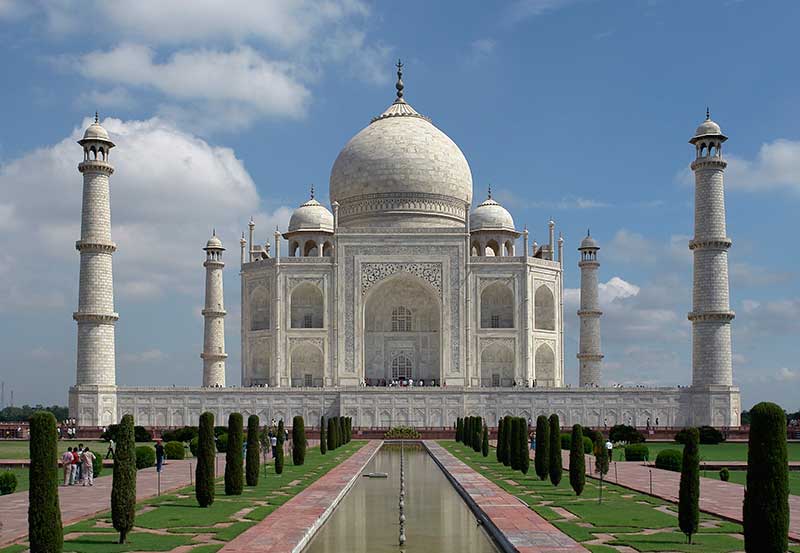
6-Days Private Luxury Golden Triangle Tour to Agra and Jaipur From New Delhi
Delhi, Jaipur and Agra are three cities that capture your imagination and take you into the fascinating, decadent and passionate world of the Mughals and Maharajas. What they left behind is some of the world's best architecture, from the Qutab Minar in Delhi to the Amber Fort in Jaipur and of course the Taj Mahal in Agra.
Please Note: We can always include Varanasi along with this itinerary.
Day 1 - Delhi
Arrival in Delhi by an international flight & transfer to the hotel around midnight. You will be met by the driver (holding a placard with your name printed on it) waiting outside the exit gate.
Overnight in Delhi
Day 2 - Delhi
Delhi, the Empress of Indian cities has a fascinating history and stimulating present.
She has often been sacked and left naked and desolate. But she could not be despoiled of the incomparable situation that marks her for the metropolis of a great empire The capital of India, Delhi has been the seat of power of a number of dynasties – the Rajput’s, the Afghans, the Turks and the Mughals who continued their imperial line until the British. Scattered over are surviving ruins, remnants of mighty edifices, tombs of warriors and saints which, in an impressive sense of magnificence are memorials not of a single city but of supplanted nations.
A full day city tour of Delhi with your tour guide, your guide will come to meet you in the lobby of your hotel at 9 am. After breakfast, we explore the historical part of the city also known as Old Delhi starting with `Shah Jehanabad’ which has some dramatic remnants of the Mughal Empire in the imposing Red Fort (only photo stop outside Red Fort) and Jama Masjid, India’s largest mosque, built by Emperor Shah Jehan, creator of the Taj Mahal.
We go on a rickshaw ride through its principal street, Chandni Chowk, originally renowned throughout Asia with its tree-lined canal flowing down its center. These days it’s a bustling jumble of shops, temples, mosques and workshops of goldsmiths, silversmiths, silk traders and embroiderers.
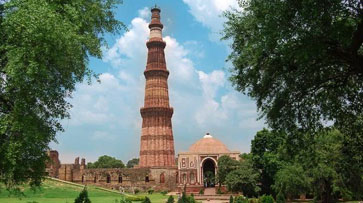 Following lunch, visit the Qutab Minar, a tower of victory begun by the Slave Dynasty’s founder, Qutb-ud-din-Aybak, in A.D. 1193 and completed by Feroz Shah Tughlaq in 1368. At its base is India’s first mosque, the Might of Islam Mosque, built on the foundation of a Hindu temple. It was completed in A.D. 1300.
Continue to visit the tomb of the second Mughal Emperor Humayun, which was commissioned by his senior wife Haji Begum, in the 16th century. This is an early example of Mughal architecture. The design elements of this tomb – a squat building lighted by high arched entrances topped by a protuberant dome and surrounded by formal gardens, were to be refined over the years to the magnificence of the Taj Mahal.
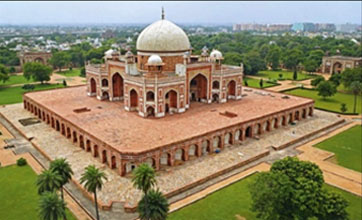 In the evening, drive around New Delhi with its majestic boulevards and grand government buildings. india Gate, Delhi's triumphal arch, the residence of India's president, the Rashtrapati Bhavan, a complex of buildings that mix Mughal and Western architectural styles. Continue on to The design elements of this tomb – a squat building lighted by high arched entrances topped by a protuberant dome and surrounded by formal gardens, were to be refined over the years to the magnificence of the Taj Mahal.
Overnight in Delhi.
Day 3 - DELHI - AGRA
After an early breakfast, we check out and drive around 3 1⁄2 hours to Agra via the expressway.  With the arrival of the Mughals in 1526 led by Babur, Agra entered a new era during the reign of emperors Akbar, Jehangir and Shah Jahan – and became one of the grandest cities of South Asia. Akbar made it a great centre for learning, art, commerce, and culture. With its cosmopolitan bazaars and strategic location on the river Jamuna, Agra was altogether a worthy setting for the focus of an empire.
We visit the Agra Fort, a World Heritage site credited to Emperor Akbar situated by the banks of the Yamuna River. The astonishing palaces, mosques and audience halls contained within its massive walls of red sandstone became once more a monumental mission of the Mughal Empire embellished by the artistic fusion of Islamic and Hindu tradition.
After the visit, drive to a good local restaurant for lunch. Later transfer to the hotel and check in.
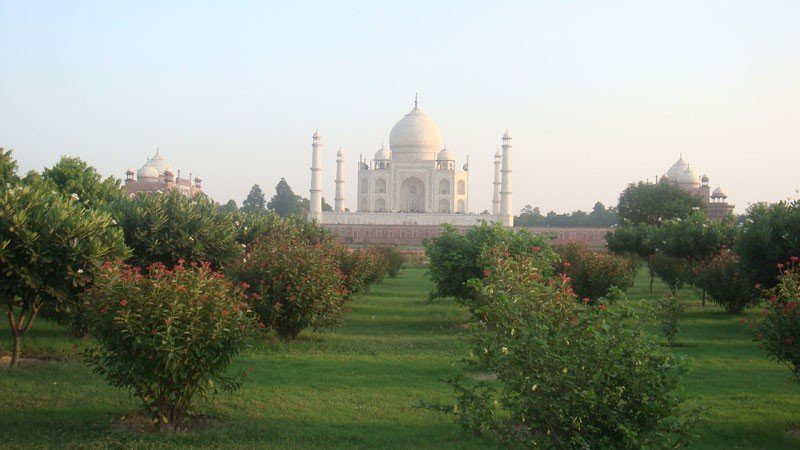 In the late afternoon, we visit Mehtab Bagh or the "Moonlight Garden". Mehtab Bagh is famous for providing an exceptional view of the Taj Mahal, especially from its eastern side. The garden’s strategic location, across the Yamuna River, allows visitors to see the Taj Mahal in its entirety, set against the backdrop of the river, with fewer crowds compared to the main Taj Mahal, offering a peaceful experience while capturing the beauty of the moment. The garden provides a stunning, unobstructed view of the Taj Mahal, framed by the lush greenery of the park.
Day 4 - AGRA - JAIPUR VIA FATEHPUR SIKRI & ABHANERI
At dawn, visit the Taj Mahal to view the monument at sunrise, when the light is delightful and the crowds are less.
Taj Mahal – The ivory gate through which all dreams pass. A lacy white grandeur, perhaps the most perfect architectural monument accomplished. Amazingly graceful from any angle, it is the close up detail which is really astounding.
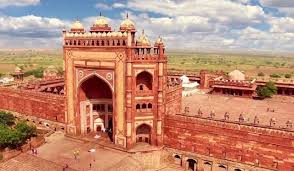 Return to the hotel for breakfast after which we check out and drive an hour through the Indian countryside to visit Fatehpur Sikri, the red sandstone former capital of the Mughal Empire. Politically astute and remarkably broadminded for his time, the emperor successfully addressed the Hindu-Moslem divide by marrying a Hindu princess whilst also combining their distinctive architectural styles finely exampled at this World Heritage site.
After the visit, we continue our journey to Abhaneri.
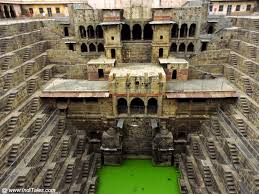 Abhaneri is an ancient village in Rajasthan renowned for its post-Gupta or early medieval monuments, Chand Baori and a local Goddess’ temple. The village is in ruins now, however Chand Baori is a huge step well, a unique idea conceived by the natives to work as a water reservoir. Chand Baori, which is fortified on all sides, is one of the largest and deepest step wells in India. This temple is an architectural jewel which symbolises 10th century architecture, the ruined images in the temple indicate that the temple was actually dedicated to Lord Vishnu.
Later, we continue on to Jaipur, a 3 hours’ drive. Jaipur is where the enduring charisma of the past blends with the throbbing vitality of today. Where a colourful cast of characters - from painters and potters to artists and antique dealers - present a fascinating picture of a city that is alive to both tradition and change.
Transfer and check into our hotel. Evening at leisure.
Overnight in Jaipur.
Day 5 - JAIPUR
Welcome to the desert -land of Rajasthan, wedged between two major river systems of the Indian subcontinent. Peopled by a most remarkable warrior race of valiant fighters and passionate builders who ruled from their numerous hill fortresses, this geographic region nurtured a most extraordinary culture - rich in legends of romance and chivalry, sacrifice and heroic deeds. Abundance of building materials, extremes of climate, love of life and the dire necessity of fortifications made architecture a living tradition. Who were these illustrious people? Renowned by legend to have been born out of the sacred fire pit, these ‘sons of kings’ trace their Vanshavalis (genealogical lineage) to the sun and the moon.
Jaipur is where the enduring charisma of the past blends with the throbbing vitality of today. Where a colourful cast of characters - from painters and potters to artists and antique dealers - present a fascinating picture of a city that is alive to both tradition and change.
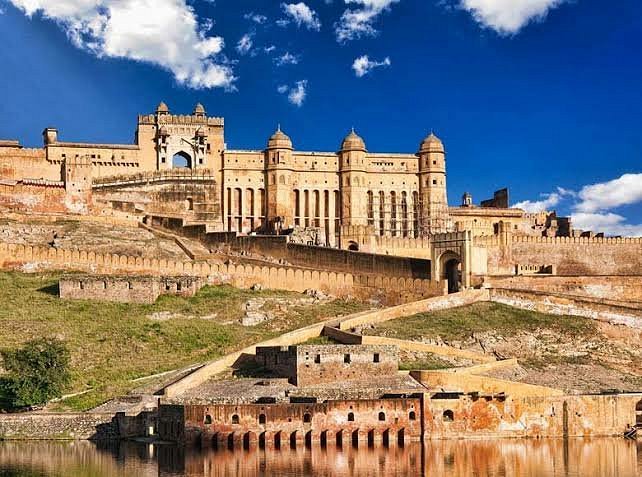 After breakfast, we visit the Amber Fort, the former seat of the Rajput rulers of Jaipur.
Ascending the fortress seated in a jeep, wander around the beautiful palaces. Jal Mahal (photo stop).
Continue on to visit the City Palace. Plenty of good options on the way to dive into the legacy of gems & jewellery in Jaipur.
The City Palace located in the center of town and is surrounded by a high wall. It differs from conventional Rajput fort palaces in its separation of the palace from its fortifications, perhaps modeled on Mughal architectural style with its main building scattered in a fortified campus. The royal family occupies a portion of this palace, while other areas have been converted into museums. View their vast collection of textiles and costumes, an array of armory, miniature paintings, and carpets, the finest of which was displayed at the “Flowers Underfoot: Indian Carpets of the Mughal Era” exhibit in at New York’s Metropolitan Museum of Art (1997-1998).
We suggest lunch at Baradari Restaurant situated inside the City Palace.
Visit Jantar Mantar. Jantar Mantar in Jaipur is one of the most fascinating and historically significant sites in India, offering a unique blend of science, architecture, and astronomy. This UNESCO World Heritage Site, located in the heart of Jaipur, is an astronomical observatory built in the 18th century by Maharaja Jai Singh II, the founder of Jaipur. It’s an educational and inspiring experience, providing insight into ancient Indian scientific practices that continue to impress even in modern times.
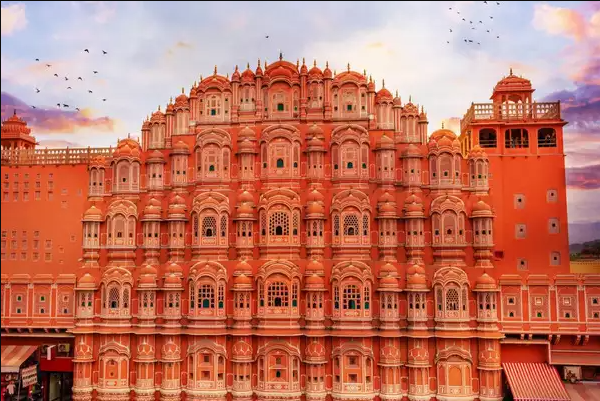 We also stop by the Hawa Mahal or Palace of Winds, a stunning example of Rajput artistry made of red and pink sandstone, beautifully outlined with white borders and motifs painted with quick lime.
Later, we visit the Johari Bazaar, where much of the story of this historical capital began...where a spirit of commerce and tide of human life rolls down the center of the street, unruffled by vehicles from all quarters ploughing their way through. The city’s densest concentration of lifestyle and retail stores is a crush of shop–fronts, street stalls, hawkers and spice merchants and a seething mass of people. Return to the hotel with the evening at leisure.
Overnight in Jaipur.
Day 6 - JAIPUR - DELHI (300kms - 5 hours drive approx.)
08:30 am Check out from the hotel and drive to Delhi after breakfast.
Transfer to a hotel or airport in Delhi.
Tour ends.
* Please contact us for a quotation.
Thanks
Please note: We wish to inform you that Satellite Phones, GPS devices, Drones etc. are not permitted in India. Drones may be permitted after obtaining license before arrival.


 Videos